

Smart idea

Why should companies learn to think in terms of Blue Ocean?

From continuous improvement to dynamic renewal: why should companies learn to think in terms of Blue Ocean?

In many industries, growth is becoming increasingly difficult. Markets are saturated, margins are shrinking, and competition is turning into a constant battle over prices, deadlines, market share, and more. The problem is that this type of competition often ends up exhausting teams and undermining results.

This is precisely what is known as a red ocean: an environment where the rules of the game are already established, and where companies compete on the same criteria, with increasingly similar offerings.

However, there is another strategic approach: thinking in terms of Blue Ocean.

Red Ocean vs Blue Ocean: a difference in approach

In a red ocean, the company seeks to:

  • surpass the competition,
  • capture existing customers,
  • compete on incremental improvements.

In a blue ocean, the company seeks instead to:

  • create new strategic spaces,
  • attract non-customers,
  • Break the value-cost compromise,
  • Offer a truly new utility.

The change is therefore profound: it is not about ‘doing better’, it is about doing things differently.

Why continuous improvement is no longer enough

Many companies have made continuous improvement part of their culture. This is positive: it allows them to optimise, reduce waste, and improve quality and performance.

But in some cases, this approach reaches a ceiling. We improve again and again, but we remain locked into the same strategic framework.

At this stage, the risk is to become what some models call a ‘sedentary’ or a ‘migrator’:

  • the sedentary imitates, with little prospect of growth,
  • the migrator improves, but without exploiting its full potential.

The transition to ‘pioneer’ status therefore requires a different approach: dynamic renewal.

Dynamic renewal: a sustainable advantage

Dynamic renewal consists of combining:

  • operational excellence (core business),
  • and the ability to create new markets or new demand.

This involves working simultaneously on:

  • strategy,
  • human skills,
  • methods,
  • execution.

It is not an ‘idea’, it is a discipline.

The winning trio: Perspective – Team – Roadmap

Organisations that succeed in creating blue oceans often rely on three pillars :

  1. A clear perspective: where are we going, and why?
  2. A committed team: capable of driving change, even in the face of uncertainty.
  3. A structured roadmap: to transform a vision into an action plan.

This triptych is essential because innovation is not solely technological. It is often:

  • organisational,
  • methodological,

The human factor: the most underestimated element

Most transformations fail not because the tools are bad, but because:

  • there is no trust,
  • teams do not understand the meaning,
  • critical behaviours are not aligned.

The Blue Ocean strategy is therefore not just a method. It is also a mindset: Starting Smart, Scaling Fast.

Conclusion

In an increasingly unstable industrial and economic world, the real question is no longer:
‘How can we be better than the competition?’
but rather:
‘How can we make the competition less relevant?’

Moving from continuous improvement to dynamic renewal means accepting to broaden your horizons, reshape your industry, and open up a new value-cost frontier.

How a VDM strategy transforms industrial performance (beyond simple cost reduction)

In many industrial companies, maintenance is still perceived as a cost centre. People talk about budgets, spare parts, labour and response times. However, effective maintenance is not a cost: it is a lever for creating value.

The question is therefore not ‘how much does maintenance cost’, but rather:
what economic and operational results does it generate?

This is exactly what a structured approach such as the VDM (Value Driven Maintenance) methodology addresses.

Why maintenance is strategic

Maintenance directly influences:

  • equipment availability,
  • production capacity,
  • product quality,
  • personal safety,
  • environmental compliance,
  • asset lifespan.

In other words, it affects the factors that make or break profits, sometimes in ways that are not immediately apparent.

The four levers of value creation

A VDM strategy is based on clear, measurable levers that are linked to overall performance:

  • AU (Asset Utilisation): use and availability of assets
  • SHEQ: safety, health, environment, quality
  • CC (Cost Control): cost control
  • CA (Capital Assets): investments, lifespan, projects

The benefit is significant: not all companies need to prioritise the same lever at the same time. One factory may be strong on availability but weak on costs. Another may be ‘best in class’ on costs but fragile on safety.

Measure before acting : the maturity audit

The first step in a structured approach is to measure:

  • the current level of performance,
  • the maturity of practices,
  • the consistency of processes.

A VDM audit provides a reliable snapshot of the situation, far removed from impressions or habits.

Benchmarking: positioning yourself in your industry

Benchmarking complements this analysis by comparing results across a set of indicators. This allows you to:

  • understand where the gaps are,
  • identify best practices,
  • estimate realistic potential for improvement.

Setting realistic and credible targets

One of the common pitfalls is setting unrealistic goals.
A VDM approach helps to define targets that are:

  • achievable,
  • progressive,
  • consistent with operational reality.

Credibility is essential: without it, team buy-in collapses.

From strategy to execution

The strength of a VDM strategy is that it does not stop at diagnosis. It guides:

  • the identification of key pillars to be optimised,
  • the design of a winning strategy,
  • financial validation,
  • implementation,
  • and annual optimisation.

A strategy that is not monitored and adjusted quickly becomes obsolete, as levers change over time.

Conclusion

Effective maintenance is not just a matter of ‘repairing faster’. It is a matter of strategy, management, and value creation.

Adopting a VDM approach means giving maintenance the role it deserves:
A driver of sustainable performance, serving the company and its people.

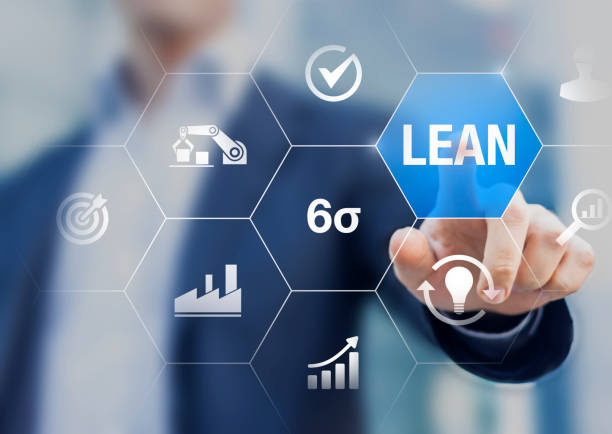
The LEAN tool that reveals the real bottlenecks (and how to make a pilot project a success)

Many organisations want to ‘go Lean’. They launch projects, talk about Kaizen, set up indicators, and sometimes even create a dedicated unit.

But in reality, Lean transformation often fails for one simple reason:
improvements are made locally, without understanding the overall system.

This is exactly where Value Stream Mapping (VSM) becomes an essential tool.

VSM: seeing the system instead of tasks

Value Stream Mapping allows you to visualise:

  • the physical flow (product or service),
  • the flow of information,
  • cycle times,
  • waiting times,
  • inventory,
  • bottlenecks.

It answers a simple but powerful question:

How does a unit of demand flow through all the processes?

In other words: we follow the actual path of value.

Why companies often get the problem wrong

Without VSM, many organisations focus on:

  • a workstation,
  • a team,
  • a workshop,
  • a machine,
  • or a procedure.

But the real problem often lies elsewhere:
in coordination, in expectations, in transfers, or in the way information flows.

VSM brings these invisible areas to light.

The 5 Lean principles applied

VSM fits naturally into the 5 Lean principles:

  1. Define value from the customer’s perspective
  2. Map the value stream
  3. Create a continuous flow
  4. Implement a pull flow
  5. Strive for perfection

This framework helps to avoid ‘cosmetic’ Lean (5S without impact) and build performance-oriented Lean.

The key: a well-defined pilot project

A successful Lean project rarely starts with a total transformation. It starts with a pilot project, chosen wisely.

A structured approach generally includes:

  1. Identifying fundamental obstacles and the ‘burning platform’
  2. Assessing the current industrial system
  3. Training and raising awareness among staff
  4. Mapping the current state
  5. Defining the future state
  6. Setting realistic goals
  7. Implementing Kaizen initiatives

The pilot project is crucial because it allows you to:

  • test the method,
  • achieve visible results,
  • create momentum,
  • build credibility.
  • The human factor: the key to success

VSM is not a ‘PowerPoint’ exercise. It must be done with the teams on the ground because:

  • they know the reality,
  • they experience the constraints,
  • they hold the solutions.

The most effective approach combines:

  • method,
  • leadership,
  • and trust.

Conclusion

Value Stream Mapping is a simple but extremely powerful tool:
it transforms opinions into facts and intuitions into decisions.

A company that knows how to map and improve its value chain builds a sustainable advantage:
a more fluid, robust and efficient system — serving both customers and teams.