
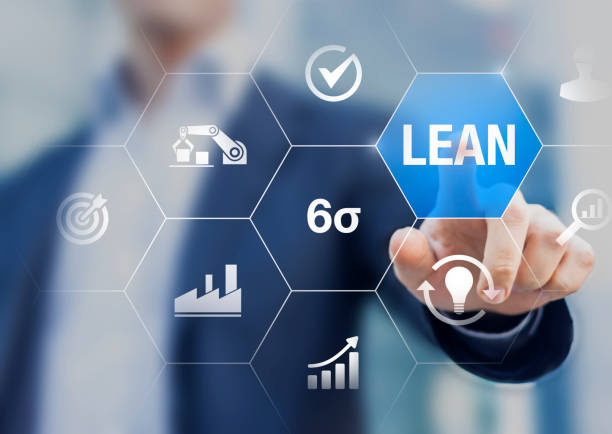
Many organisations want to ‘go Lean’. They launch projects, talk about Kaizen, set up indicators, and sometimes even create a dedicated unit.
But in reality, Lean transformation often fails for one simple reason:
improvements are made locally, without understanding the overall system.
This is exactly where Value Stream Mapping (VSM) becomes an essential tool.
VSM: seeing the system instead of tasks
Value Stream Mapping allows you to visualise:
- the physical flow (product or service),
- the flow of information,
- cycle times,
- waiting times,
- inventory,
- bottlenecks.
It answers a simple but powerful question:
How does a unit of demand flow through all the processes?
In other words: we follow the actual path of value.
Why companies often get the problem wrong
Without VSM, many organisations focus on:
- a workstation,
- a team,
- a workshop,
- a machine,
- or a procedure.
But the real problem often lies elsewhere:
in coordination, in expectations, in transfers, or in the way information flows.
VSM brings these invisible areas to light.
The 5 Lean principles applied
VSM fits naturally into the 5 Lean principles:
- Define value from the customer’s perspective
- Map the value stream
- Create a continuous flow
- Implement a pull flow
- Strive for perfection
This framework helps to avoid ‘cosmetic’ Lean (5S without impact) and build performance-oriented Lean.
The key: a well-defined pilot project
A successful Lean project rarely starts with a total transformation. It starts with a pilot project, chosen wisely.
A structured approach generally includes:
- Identifying fundamental obstacles and the ‘burning platform’
- Assessing the current industrial system
- Training and raising awareness among staff
- Mapping the current state
- Defining the future state
- Setting realistic goals
- Implementing Kaizen initiatives
The pilot project is crucial because it allows you to:
- test the method,
- achieve visible results,
- create momentum,
- build credibility.
- The human factor: the key to success
VSM is not a ‘PowerPoint’ exercise. It must be done with the teams on the ground because:
- they know the reality,
- they experience the constraints,
- they hold the solutions.
The most effective approach combines:
- method,
- leadership,
- and trust.
Conclusion
Value Stream Mapping is a simple but extremely powerful tool:
it transforms opinions into facts and intuitions into decisions.
A company that knows how to map and improve its value chain builds a sustainable advantage:
a more fluid, robust and efficient system — serving both customers and teams.